Programs

Turing Keynote


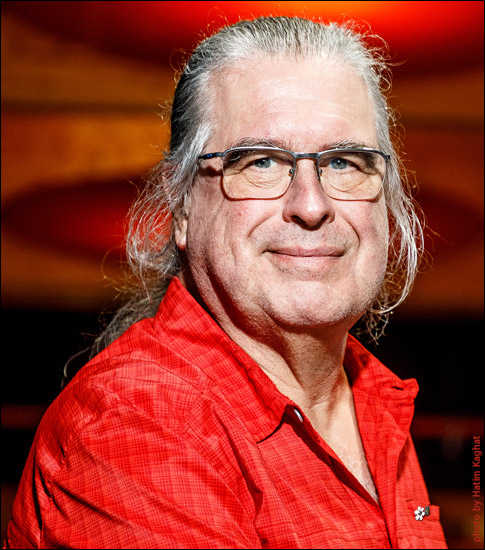
Credited it to photographer Hatim Kaghat
Professor Gilles Brassard

2025 ACM A.M. Turing Award Laureate

Université de Montréal, Canada

Title: Alan Turing and Me

Abstract: Alan Turing is one of the greatest mathematicians of the 20th century, as well as being the founding father of computer science. I am therefore very proud to have received the ACM award that bears his name. However, rather than talk about the work that earned me this accolade, I’m going to tell you a surprising story: in his foundational 1936 paper, in which Turing introduced what is known today as the Turing machine, he gave a completely inappropriate definition for computable real numbers. Indeed, according to his definition, addition and multiplication by three would not be computable! But alas, even with the best definition known today (which is probably the best possible definition), the question of whether a real number is equal to zero remains undecidable. All of this is related to the fascinating intuitionistic mathematics of Brouwer, about which I shall not presume any prior knowledge. This is joint work with Sophie Berthelette and Xavier Coiteux-Roy and published as https://doi.org/10.1016/j.tcs.2024.114573.

Biography: Professor Gilles Brassard is a Professor of Computer Science at the Université de Montréal, Canada, and one of the world’s most influential pioneers in quantum information science, quantum cryptography, and quantum computing. He is the recipient of the 2025 ACM A.M. Turing Award, the highest distinction in computer science, jointly with Charles H. Bennett, in recognition of their groundbreaking contributions to the foundations of quantum information science and secure communication.
Professor Brassard is widely recognised as a founding father of quantum cryptography. Together with Charles Bennett, he developed the revolutionary BB84 quantum key distribution protocol in 1984, establishing the foundations of quantum-secure communication by demonstrating how the principles of quantum mechanics could be used to achieve unprecedented levels of information security. He also played a pioneering role in the discovery of quantum teleportation in 1993, one of the most remarkable breakthroughs in quantum information science. His research has fundamentally transformed our understanding of information, computation, and security, helping establish quantum information science as a major scientific discipline.
Over his distinguished career, Professor Brassard has made numerous seminal contributions to theoretical computer science, cryptography, and quantum information processing. His visionary work has not only shaped the theoretical foundations of quantum technologies but also inspired practical advances in quantum communication networks, quantum computing, and next-generation cybersecurity. His research continues to influence scientists and engineers worldwide and has played a central role in the emergence of today’s rapidly developing quantum technology industry. His extraordinary scientific achievements have been recognised through many of the world’s most prestigious honours, including the Wolf Prize in Physics (2018), the Breakthrough Prize in Fundamental Physics (2023), and the Gerhard Herzberg Canada Gold Medal for Science and Engineering (2009). He is a Fellow of the Royal Society of London and the Royal Society of Canada, and an International Member of the US National Academy of Sciences.
Professor Brassard earned his PhD in Computer Science from Cornell University in 1979 and has spent his academic career at the Université de Montréal, where he has mentored generations of researchers and helped establish Canada as a leading centre for quantum information research. His pioneering discoveries have reshaped the boundaries between computer science and physics, leaving an enduring legacy in modern science and technology.


Keynote Speakers

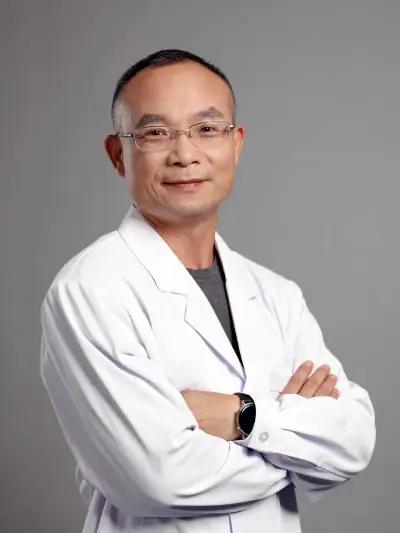
Professor Minmin Luo

Director and Distinguished Investigator, Chinese Institute for Brain Research, Beijing, China

New Cornerstone Investigator, China

Title: Development and Clinical Application of Fully Implantable High‑Throughput Brain Machine Interfaces

Abstract: Brain machine interfaces (BMIs) enable direct interaction between the brain and external devices. Invasive and semi invasive BMIs offer high signal quality and broad clinical potential, yet developing wireless, high throughput, and fully implantable systems remains highly challenging. Our team focuses on this frontier and has successfully developed two fully implantable, wireless, high-throughput BMI systems: “The NeuCyber Matrix BMI System (Beinao-1)” and “The NeuCyber Array BMI System (Beinao 2)”. “Beinao 1” is the world’s first semi invasive BMI that achieves high throughput (>100 channels), wireless implantation, and practical usability. In collaboration with Xuanwu Hospital, Beijing Tiantan Hospital, and other clinical partners, it has been implanted in 44 patients, including those with spinal cord injury, ALS, and stroke. The system has now entered the GCP clinical validation stage. With the longest implantation exceeding 1.5 years and cumulative operation over 100K hours, it has demonstrated stable performance on direct brain control of cursor movement and facilitated rehabilitation of tetraplegia patients. Beinao 2 has achieved, for the first time internationally, brain controlled interception of two dimensional moving targets. Its high throughput flexible microwire electrodes and thousand channel neural acquisition system achieved cutting-edge performance, with the wireless, fully implantable version expected to enter clinical validation in 2026.

Biography: Minmin Luo is Director of the Chinese Institute for Brain Research, Beijing, and a New Cornerstone Investigator. His longstanding research focuses on the neural mechanisms of reward and punishment and translational research on related brain disorders. He has published more than 100 high-impact research papers, been granted over 20 invention patents, and led 19 clinical trials. These include trials of groundbreaking gene therapies for vision restoration and drug-resistant epilepsy authorized by China’s National Medical Products Administration or the U.S. Food and Drug Administration, as well as a world-leading wireless, highthroughput invasive brain–computer interface system.


Professor Pankaj Sah

Fellow of the Australian Academy of Science

Director, the Queensland Brain Institute (QBI), The University of Queensland, Australia

Title: Formation Storage and Consolidation of Fear Memory

Abstract: Fear memories are essential for adaptive behaviour, but when they persist beyond the original threat or are expressed in inappropriate contexts, they can contribute to anxiety-related disorders. The amygdala and medial prefrontal cortex are key components of the distributed neural circuitry that supports the acquisition, consolidation, expression and extinction of learned fear. This lecture will examine how fearrelated information is represented and transformed within amygdala microcircuits, and how reciprocal interactions with prefrontal cortical networks stabilize fear memories and shape their later expression. Particular attention will be paid to connections between the basolateral amygdala and prelimbic and infralimbic divisions of the prefrontal cortex. Integrating evidence from anatomical reconstruction, electrophysiology, behavioural analysis and circuit-manipulation approaches, this lecture will illustrate how synaptic plasticity and coordinated activity across these regions remodel fear-related memory ensembles after learning. The lecture will further consider how context and extinction recruit partially distinct pathways, and how disruption of amygdala-prefrontal communication may lead to maladaptive fear and anxiety.

Biography: Professor Pankaj Sah is Director of the Queensland Brain Institute (QBI) at The University of Queensland (UQ). He is renowned for his work in understanding the neural circuitry of the amygdala, an area of the brain that plays a central role in learning and memory formation. Dysfunction of the amygdala leads to a host of anxiety-related disorders. His laboratory uses a combination of molecular tools, electrophysiology, anatomical reconstruction, calcium imaging and behavioural studies to examine the electrophysiological signatures of different brain regions and their impact on disease. Recently, his laboratory has been working with patients undergoing electrode implantation for deep brain stimulation, which is used to treat a variety of disorders such as Parkinson’s disease, Tourette’s syndrome and essential tremor. Professor Sah trained in medicine at The University of New South Wales and, after completing his internship, gained a PhD from the Australian National University. Following postdoctoral work at the University of California, San Francisco, and UQ, he established his own laboratory at the University of Newcastle in 1994. He then joined the John Curtin School of Medical Research at the Australian National University as a group leader in 1997. He was recruited to QBI as a founding member in 2003, and has been Director since July 2015. Professor Sah has published over 110 papers in international peer-reviewed journals. He is also the Editor-in-Chief of the Nature Partner Journal npj Science of Learning, the first journal to bring together the findings of neuroscientists, psychologists, and education researchers to understand how the brain learns.


BI 2026 Industry Feature Talk

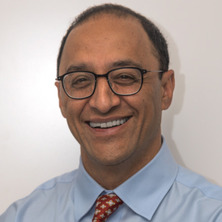
Professor Soman Elangovan

Title: Advancing Mental Health Research and Innovation Through Hospital–University–Industry Collaboration

Abstract: Belmont Private Hospital, officially opened in 1973, is Queensland’s largest private acute mental health service and a recognised centre for the treatment of complex psychiatric conditions. As an Authorised Mental Health Service under the Queensland Mental Health Act, Belmont provides specialist inpatient care across a broad spectrum of mental health presentations, including mood, anxiety, trauma-related, neurodevelopmental and life-stage disorders. The hospital is also home to nationally recognised specialty programs, including the Brisbane Centre for Postnatal Disorders and Australia’s only dedicated inpatient service for dissociative disorders, delivering evidence-based, multidisciplinary care.
The rapidly evolving healthcare environment presents significant challenges for hospitals, including increasing patient demand, workforce pressures, rising operational costs and the need to integrate emerging technologies. Addressing these challenges requires innovative approaches that extend beyond traditional clinical practice and embrace collaboration across healthcare, academia and industry.
This presentation will explore the opportunities for establishing strategic partnerships between Belmont Private Hospital, universities and industry to advance mental health research, education and innovation. Potential collaborative initiatives include joint research projects, clinical re-search placements, PhD and postgraduate supervision, joint grant applications, and the development, translation and commercialisation of innovative healthcare solutions.
Key areas of research opportunity include clinical and translational research, health services research, patient experience and outcomes, healthcare efficiency and sustainability, and the implementation of evidencebased practices. By leveraging the complementary expertise, resources and capabilities of hospital clinicians, academic researchers and industry partners, these collaborations have the potential to strengthen research capacity, improve clinical practice and enhance patient outcomes.
Ultimately, the presentation will highlight how meaningful hospital– university–industry partnerships can create a sustainable platform for mental health research, knowledge exchange and innovation, positioning Belmont Private Hospital as an active contributor to the advancement of mental healthcare in Queensland and nationally.

Biography: Dr Soman Elangovan is a Senior Consultant Psychiatrist specialising in General Adult Psychiatry. Dr Elangovan has special interests in mood disorders, anxiety disorders, ADHD, neuropsychiatry and dual disability.
He also provides neurostimulation in his practice which includes Electroconvulsive Therapy and Repetitive Transcranial Magnetic Stimulation (rTMS) which is a proven and alternative treatment for depression. Dr Elangovan has more than 25 years’ experience in General Adult Psychiatry and has worked for Queensland Health since 2003 as a Senior Consultant Psychiatrist.
He completed his MBBS in 1991, India and 1997 completed his specialist training Doctor of Medicine in Psychiatry at the National Institute of Mental Health and Neurosciences (NIMHANS) in Bangalore, India.
He has been awarded International Fellowship and Distinguished Fellowship from the American Psychiatric Association (APA) for his clinical service and academic excellence. He currently holds the position of Australian Ambassador for the American Psychiatry Association International Membership division.
Dr Elangovan is a College Examiner and Supervisor at the Royal Australian and New Zealand College of Psychiatrists (RANZCP), and has previously been a Committee Member of the College. He is also a faculty member of Intellectual Disability and Neuropsychiatry, of the Royal College of Psychiatry, London. He is also a member of national and international ADHD associations.